HMD Global, the company that is making Nokia smartphones is planning to launch the flagship, Nokia 9 in coming months. According to a new tip reported by Nokia Power User. the company may be planning to include Iris scanner to the upcoming flagship smartphone.
The report hinted at an entire list of specifications that are rumoured to come with Nokia 9. This is in contrast to the lack of any official statements from HMD Global regarding the release of the smartphone.
Nokia 9 is expected to sport a 5.5-inch QHD OLED display panel while running on Qualcomm Snapdragon 835 with Adreno 540 GPU. The quality German glass made by Carl-Zeiss used by original Nokia is expected to make a comeback with Nokia 9 where 22MP Dual-lens camera module will be equipped with Carl-Zeiss optics and a 12MP front camera. Nokia 9 will come with 6GB RAM and two storage variants of 64GB and 128GB internal storage. The smartphone will sport a 3,800 mAh battery along with Qualcomm Quick-Charge 4 support.
HMD Global will also include an Iris scanner like the Samsung Galaxy S8 and S8+ in addition to the usual fingerprint scanner.
Nokia 9 is also expected to come with IP68 certification along with Nokia OZO audio enhancements. One thing to note here is that there is nothing official about this tip like the previous tips reported so we can’t confirm about how many things will actually make the cut or if Nokia 9 will actually launch.
Publish date: April 3, 2017 12:14 pm| Modified date: April 3, 2017 12:14 pm
Back in the old days hardware manufacturers felt safe in the knowledge that no mere hardware hacker could attempt to recreate their inventions. From Sony to Philips to LG to Samsung, the consumer electronics industry was locked up and no one could crack the case. Until those meddling Arduino kids came along…
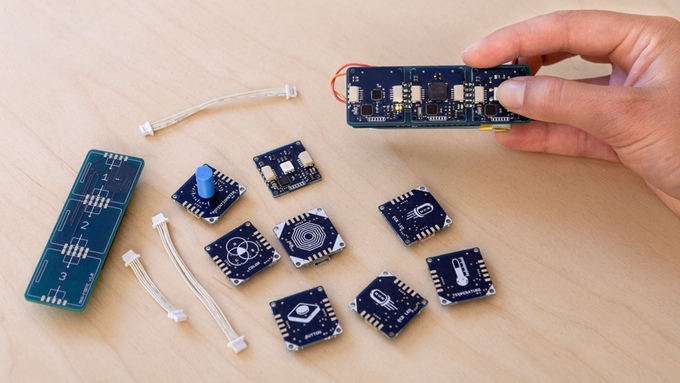
Now anyone can make cool hardware and, thanks to Arduino, it is easier than ever to connect your devices to the Internet and take in data from the outside world. TheESLOV IoT Invention Kit is an official Arduino product that adds Internet of Things capabilities to your hardware products. Trying to build a connected fridge to beat Samsung? Go for it with the ESLOV. Want to knock Sony off its perch? Try popping an ESLOV unit onto your Arduino board and take on major manufacturers from your living room.
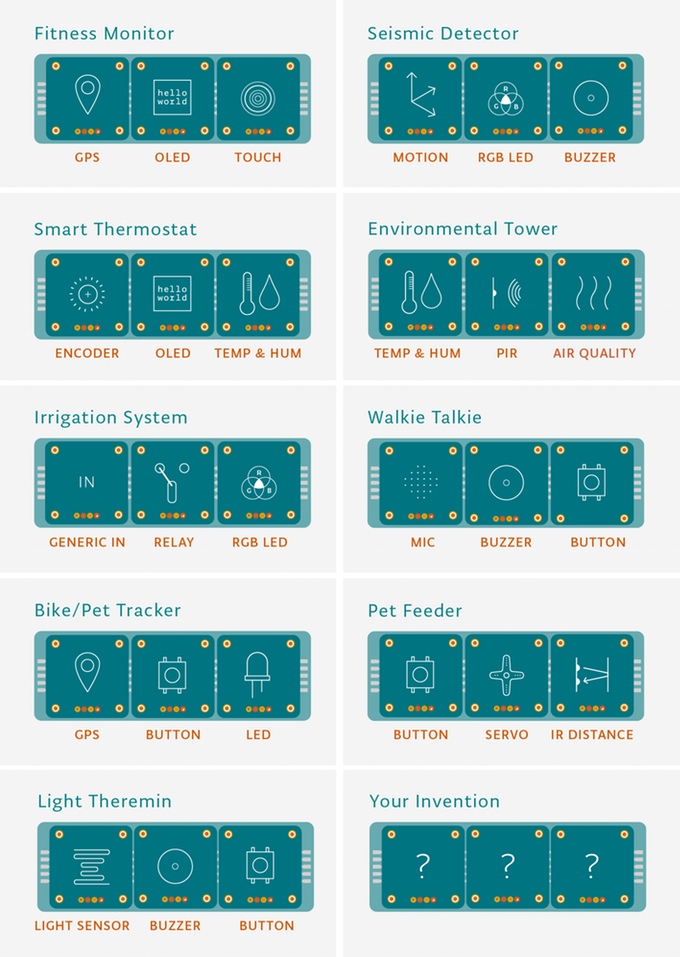
Think of the ESLOV system as a sort of Mindstorms on steroids. This self-described “plug-and-play toolkit” lets you connect multiple sensors and outputs together to create various systems. This chart shows a few of the possible permutations. Everything is controlled via Arduino’s online IDE.
The system consists of various sensors as well as a Wi-Fi hub. Interestingly each sensor runs a ATmega328P processor, the same one found on the Arduino Uno. The entry-level $99 kit includes a WiFi and motion hub, a button, a buzzer, and an LED. The Pro model includes a Hall sensor, OLED Display, and GPS – 22 modules in total – for $499. The $249 intermediate kit seems to contain everything you need to get started, however.
The company is raising on Kickstarter and they’re looking for a hefty $500,000. They’ve hit $15K so far but with a little love from the maker community I think they can get it done. The kit should ship next July.
A number of reports suggest that the new iPhone will be called the iPhone 8 (rather than the expected iPhone 7s) and that it’ll feature an OLED screen and a bezel-less design.
There are also a great many rumours surrounding the new design, the chipset and even the charging mechanism. Here’s everything we’ve heard:
Design: A bezel-less iPhone
A number of rumours are pointing to three new iPhones in 2017. These rumours suggest that there will be a regular iPhone 8 and 8 Plus, and a special edition, premium iPhone 8 model.
The phones are expected to be redesigned completely, featuring a metal frame to house the components. This frame will apparently be embedded in an all-glass body.
Apple analyst Ming-Chi Kuo suggests that the frames will be made of stainless steel and aluminium, and that only the premium model will have the stainless steel frame. Kuo also expects to see a bezel-less design for the iPhone 8.
An all-glass iPhone is intriguing, and considering the popularity of the JetBlack iPhone 7 (40-50 percent of pre-orders so far), the idea isn’t so far-fetched.
A source in Israel also spoke of the new iPhone as the iPhone 8 rather than the iPhone 7s. He also suggested that the new iPhone would be “different.”
Display: Enter OLED
A flexible OLED panel
The most fascinating rumour surrounding the new iPhone is the one that suggests Apple will use an edge-to-edge, curved, flexible OLED panel for the iPhone 8. Though Kuo does say that he expects the OLED panel to be available only on the premium iPhone.
Apple has reportedly signed an agreement with Samsung for the delivery of an estimated 40 million OLED panels, which will be supplemented by panels from the likes of LG and Sharp.
Vague rumours suggest that Apple is investing in a secretive Taiwanese lab that develops OLED panels and the company could be investing in an AMOLED panel manufacturer.
OLED is a great choice for a smartphone display because it offers almost perfect contrast ratios, is extremely thin (it doesn’t need a backlight) and can be flexible. It is also very energy-efficient (black pixels don’t consume power).
The downsides to OLED include a shorter lifespan and weakness to water damage. Considering that Apple is already using these panels in the Apple Watch and the fact that the Watch Series 2 is completely water resistant, this is not much of a concern.
Apple has reportedly been working on an integrated touch and display driver unit that is also expected to house all requisite sensors, including Touch ID.
Camera: OIS for all
With the iPhone 7, Apple introduced optical image stabilization (OIS) for the regular iPhone. It was a much needed feature that took it’s time getting to the smaller iPhone. The Plus model introduced a dual-camera system with a wide-angle and normal lens (Apple calls it telephoto, but it’s only a 56mm equivalent lens), but the latter lacks OIS.
While a new and “improved” camera is expected, no one is expecting much from the system other than OIS for the normal lens, says MacRumours.
Wireless charging, A11 SoC and more
Since Apple uses a sequential numbering scheme for its SoCs, the new iPhones will use an A11 chip. Some suggest that the chip will be built on 10nm manufacturing technology, which should further improve the efficiency of the chip. This should yield improved battery life as well as performance.
Apple has also shown a great deal of interest in wireless charging, particularly in WiTricity. The company is also apparently more interested in long-range wireless charging rather than the pad-based wireless charging that is currently popular.
With long-range charging, you’ll be able to use your phone in the vicinity of the wireless charger, without having to place it down on a wireless charging pad. This should also ameliorate that the lack of a headphone jack brings up. You’ll be able to charge your phone and listen to music simultaneously.
Since the iPhone 8 is expected to be an all-glass iPhone, there will be no place for Touch ID. In this scenario, Apple might place the Touch ID sensor and other sensors under the front glass panel, much like Xiaomi is doing in their Mi 5s.
Some rumours are also hinting at Apple’s interest in Xintac, a company that specialises in biometric security, iris scanning and related technology. While we don’t expect to see this technology in the iPhone 8, Kuo does suggest that it tech might make its way into the 2018 iPhone
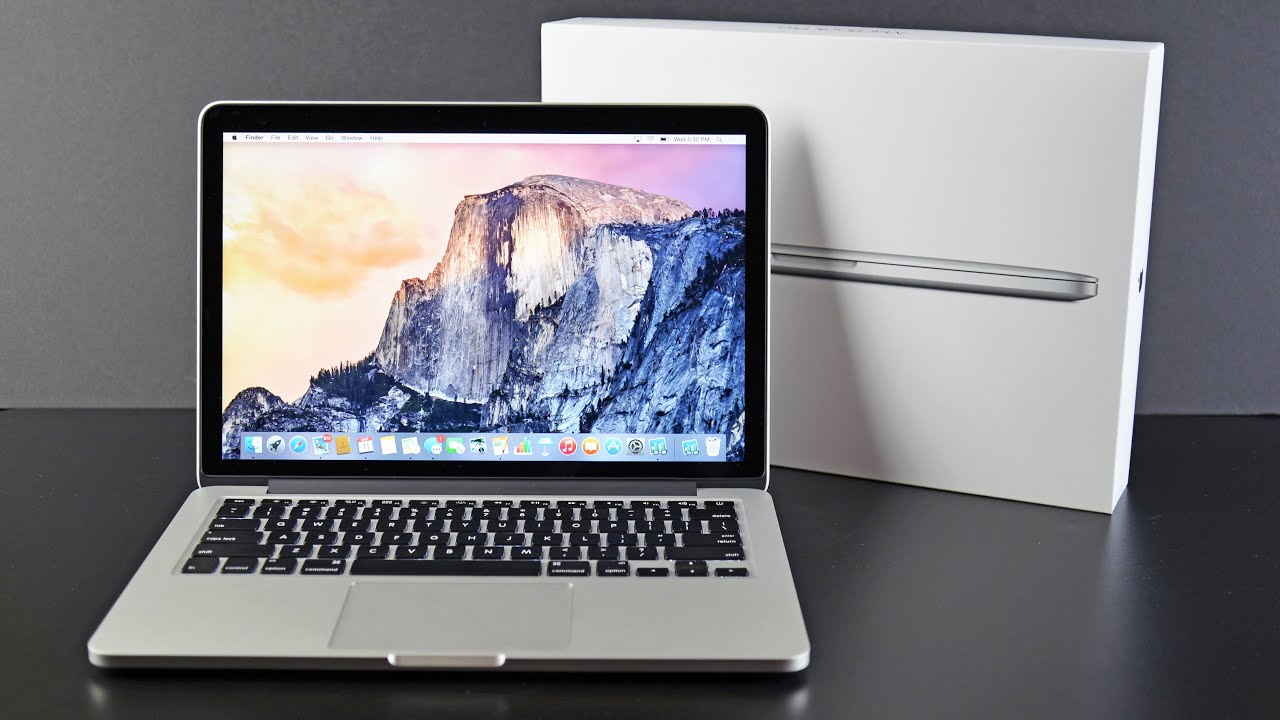
Apple’s popular MacBook Pro range is due for an update soon. With the iPhone 7 and Apple Watch Series 2 launches out of the way, the company is reportedly gearing up to ship the new laptops "some time in the second half of October,” and is currently hard at work on macOS 10.12.1 to finalize support for the rumored Touch ID sensor and OLED bar.
According to reports, Apple plans to introduce completely revamped 13 and 15-inch Retina MacBook Pros with a thinner and lighter form factor. The new models might ship with Intel’s seventh generation Kaby Lake processors, if the companies' release schedules line up, and are expected to feature multiple USB-C ports with Thunderbolt 3 support.
Apple is said to be introducing its fingerprint scanning Touch ID feature to its new family of MacBook Pros, integrating it into the power button. Just like on the iPhone, the fingerprint reader would remove the need to type in a password and allow users to authenticate Apple Pay purchases, a feature that just expanded to the web with macOS Sierra and iOS 10.
The new laptops are also expected to see the physical function keys along the top of the keyboard replaced with a new OLED display touch bar, which will present different function keys to users depending on the applications they're using.
In addition to redesigned MacBook Pro models, Apple may also introduce updated MacBook Air models and new iMacs with AMD graphics chips before the end of the year.
An Apple employee has revealed that the company is developing iPhone 8 hardware at a facility in Israel. This employee also added that the employees at the Israeli facility work on all new Apple products.
This information was revealed to a Business Insider reporter in Israel. The Apple office in question is located in Herzliya, Israel, just 15km from Tel Aviv.
While the employee didn’t reveal much information on the devices being worked on, he apparently used the words “iPhone 8,” lending credence to rumours that Apple’s upcoming iPhone will be a radically redesigned iPhone 8 rather than an iPhone 7s.
Rumours suggest that the new iPhone will have an edge-to-edge screen with curved glass, a flexible OLED panel and that it will use an all-glass body rather than an aluminium one.
Business Insider reports that the employee solders components for Apple and that he revealed that the new iPhone will be “different” from existing iPhones. He also mentioned that the new iPhone will have a better camera and that nothing is assembled in Israel.
The reporter asked around and determined that employees at the Israeli facility work on the hardware side, “verifications, something like that.”
The facility reportedly works on the chipset, storage system and camera systems used by Apple’s iPhones. Tim Cook also claims that the facility is the second-largest research and development facility that is maintained by Apple.