Showing posts with label Sony. Show all posts

Tuesday, April 4, 2017

Sony Xperia XZs first impressions: It’s a good phone, but it’s also not much of an upgrade

Sony Xperia XZs first impressions: It’s a good phone, but it’s also not much of an upgrade

Sony announced two new flagships this year at Mobile World Congress this year including the Xperia XZ Premium and the Xperia XZs. While the Premium will launch in a couple of months in most markets, the company has launched the XZs in India.
The Xperia XZs is a bumped up version of the Xperia XZ which was launched last year including a new camera and more RAM. While most of the features remain the same, I was tempted to try out the new camera features. So here is a quick look at the new Xperia XZs.
Body and design
Sony is probably one of the few companies that try really hard to be different when it comes to designing their smartphones. There aren’t any prominent changes. The design and looks are exactly the same as the Xperia XZ. This means you get Sony’s new Loop design language which honestly looks impressive. It’s a flat design with rounded edges, giving you a nice grip.
xperia-xzs-2
Sony has used its patented Alkaleido metal for the back which just a fancy term for a kind of aluminium it uses. It gives off a slight plastic feel, just like the XZ, but it is definitely a premium handset.
The front is all glass with the 5.2-inch display sitting underneath it. The front also has a loudspeaker slit, the earpiece, front camera and the usual light and proximity sensors. At the back is the new 19 MP camera with an LED flash, an RGB light sensor and laser AF. The curved right edge houses the power-button with an embedded fingerprint scanner, the volume rocker and a dedicated camera shutter button. The headphone jack is at the top, the hybrid SIM tray is on the left edge and the USB Type-C port is at the bottom.
xperia-xzs-5
Sony has got new colours. While the XZ came in Mineral black, Platinum, Forest blue and Deep pink, the new XZs comes in Black, Warm Silver, Ice Blue. Of course it is also dust and waterproof with IP65/68 certifications.
xperia-xzs-4
Display
There is no change in the display. You still get a 5.2-inch Full HD IPS LCD panel with Sony’s Triluminos display and X-Reality Engine technologies. The resolution is Full HD (1920×1080) with a pixel density of 424 ppi. The display is quite good and sharp. Colours look excellent and even brightness is good even while using it outdoors. Even the glass on top of the display has a nice finish and the touch response is on spot.
Chipset, Storage and RAM
The Xperia XZs borrows most of its hardware from its predecessor. So you get a 64-bit, Qualcomm Snapdragon 820 (MSM8996) chipset clocked at 2.15 GHz, but there is 4 GB RAM on this one compared to 3 GB on the last one. An Adreno 530 GPU takes care of the graphics. Internal storage remains at 64 GB which is expandable up to 256 GB via the hybrid SIM slot.
We are moving from Snapdragon 821 to the 835, and I know sometimes specifications don’t matter, but there is a population which just ignores a smartphone if it has older hardware. Something to think about.
OS and Software
The Xperia XZs arrives with the latest Android 7.1.1 Nougat update with Sony’s light skinning on top. The UI runs smooth. Sony has added new ‘Actions’ feature which basically automate certain features by learning the user’s habits. For instance, it can turn on ‘Do not disturb’ mode when you are at a certain location, or at a certain time of the day, or turns on/off roaming when you are going abroad.
Sadly, Sony still has loaded the OS with a lot of bloatware, which can be annoying for certain users.
Camera
Here is where the real changes are. Sony has got a brand new camera which is also loaded on the Xperia XZ Premium. It’s a 19 MP sensor (1/2.3-inch) with a 25 mm f/2.0 lens, a dual-tone flash, predictive and laser auto-focus and an RGBC-IR sensor for natural colour rendering. This new sensor which the company calls ‘Motion Eye’ comes with super slow motion video recording at 960 fps, which is a first on a smartphone. This lets you shoot slow-mo videos that are four times slower than traditional smartphone cameras. Apart from this, there is predictive capture, which can shoot a moment and three frames right before you hit the shutter button.
xperia-xzs-3
I tried out these features and they are actually good. The super slow-mo can get tricky as it requires a well lit environment. The predictive capture feature is pretty good and I managed to get some moving subjects without missing the moment. However, the overall quality of the pictures was not as good as I expected from a flagship smartphone. I still need to test the camera thoroughly.
The primary camera can also record 4K video with SteadyShot 5-axis digital stabilisation. The front camera is the same as last year, a 13 MP (1/3.06-inch) sensor with a 22 mm wide-angle lens.
Battery and connectivity
The smartphone still gets a 2,900 mAh battery with support for Qualcomm Quick Charge 3.0 and Sony’s Qnovo battery tech which elongates the battery’s life. There is also Sony’s Stamina mode that lowers performance to increase the battery time. I need to properly test the battery before I can comment about its performance.
As for connectivity you get a dual-nano SIM hybrid tray, 4G LTE with VoLTE, Wi-Fi, Bluetooth, NFC, FM radio, USB Type-C with OTG support.
Conclusion
Sony has been struggling with its smartphones even though they seem to offer an interesting handsets. The updated Xperia XZs doesn’t seem like a game changer to me and I think it would take a beating from most of the flagships out there. I am not saying this is a bad smartphone and I need to test it thoroughly to come to a conclusion, though. My initial few hours with the handset have been decent but not as good as one would feel with a flagship phone.
And then there is the price. At Rs 49,990 it isn’t cheap. Considering its package, it sounds at par with a few flagships, but can it match up to them? Stay tuned for my full review.
Publish date: April 3, 2017 9:00 pm| Modified date: April 4, 2017 10:15 am

Thursday, December 8, 2016

Google, Samsung, Oculus, HTC, Sony partner to create a Global VR Association

Google, Samsung, Oculus, HTC, Sony partner to create a Global VR Association

By 
Virtual reality has seen a lot of development this year and many tech companies have come out with their own VR headsets as well. But as it stands, the VR headsets and VR roadmaps seem to be going their own paths and there isn’t any synergy so to speak. In order to stop that, top companies have decided to come together.
Google, HTC, Oculus, Samsung, Sony and Acer have come together in a partnership to create the Global Virtual Reality Association (GVRA) which aims to ‘unlock and maximise VR’s potential’.
This seems to be a logical step, as the current ecosystems are working in silos. For instance, the games on the Oculus store will not play on the Vive or PS VR or the sensors on the Vive are only unique to the Vive headset and will not work with anything else. Similarly Sony’s PS VR requires the PS 4 and its own sensor.
According to the press release shared by the association, “The Global Virtual Reality Association (GVRA) will develop and share best practices for industry and foster dialogue between public and private stakeholders around the world.”
The association aims to promote responsible development and adoption of VR on a global scale. The members are expected to share best practices, conduct research and bring the VR community on the same page.
“The GVRA is a necessary first step toward ensuring great VR experiences for everyone, through collaborating on research and sharing best practices as the field grows and evolves. We look forward to working with our industry colleagues,” said Google’s director of immersive design Jon Wiley.
Jordan McCollum, the general counsel for Oculus at Facebook said, “We’re still very much in the early stages of VR, so it’s critical that industry leaders work together to create and share ideas on how we can safely build this industry. I’m looking forward to working with other hardware makers to proactively address the challenges we need solve to make VR a success over the long term.”

Sony PlayStation 4 sales crosses the 50mn mark in worldwide sales

Sony PlayStation 4 sales crosses the 50mn mark in worldwide sales

By 
Sony Corp said on Wednesday sales of its PlayStation 4 video game console had exceeded 50 million units as of 6 December, helped by strong demand during the year-end holiday season.
The PlayStation 4, which went on sale in late 2013, has been Sony’s fastest-selling game console. It released in the US on 15 November 2013 and arrived on Indian shores in January 2014.
According to CNET the worldwide sales numbers includes the original PlayStation 4 model, the recently released slim PS4 variant as well as the new PlayStation 4 Pro. 
The slimmer PS4 is said to be more energy-efficient than PS4. It costs around $300, down from $350 for the previous version, and went on sale on 15 September earlier this year. The PlayStation 4 Pro costs around $400 and went on sale on 10 November abroad.
PlayStation 4 Pro offers 4K gaming, displaying hyper-realistic graphics and immersive visuals – as long as it is hooked up to a HDR, or high dynamic range TV.
“We’re truly delighted that the PS4 community continues to flourish since launch three years ago,” said Andrew House, president and global CEO of Sony Interactive Entertainment, in a press statement. “We will continue to provide the best gaming experiences available as we focus on accelerating our business and expanding the PS4 ecosystem.”
With inputs from Reuters

Thursday, November 10, 2016

SonyLIV launches ‘LIV Kids’ app addressed at children; to be available on website and YouTube as well

SonyLIV launches ‘LIV Kids’ app addressed at children; to be available on website and YouTube as well

SonyLIV, the digital platform of Sony Pictures Networks’ India, on Thursday launched “LIV Kids” that will feature content designed for children.
LIV Kids will feature popular nursery rhymes such as “Pop Goes the Weasel”, “Twinkle Twinkle Little Star”, “Humpty Dumpty” and “Wheels on the Bus”.
Produced by SonyLIV, the content on LIV Kids will be available on SonyLIV’s website and mobile application, as well as on its YouTube channel.
“With the category offering an exciting range of nursery rhymes which are both fun and informative, we are confident that our younger audience will enjoy our latest addition to the fullest,” said Uday Sodhi, executive vice-president and head (Digital Business), Sony LIV, in a statement.
SonyLIV is a premium video on demand (VOD) service by Sony Pictures Networks’ India (SPN) providing multi-screen engagement to users on all devices
The digital platform was launched in January 2013 and archives 20 years of content from the network channels of Sony Pictures Networks’.
IANS

Saturday, October 15, 2016

Sony’s PlayStation VR does work on PC and Xbox One, but it’s a crippled experience

Sony’s PlayStation VR does work on PC and Xbox One, but it’s a crippled experience

By 
Sony’s PlayStation VR headset is the cheapest VR headset around today. While the Oculus Rift and HTC Vive will set you back a whopping $799 each (with controllers), the PSVR will set you back by $550 (with all accessories). But there’s a catch.
Unfortunately, the PSVR headset is only compatible with Sony PlayStation 4 and later consoles and there’s no way to get the device running on a PC or laptop or other such device. Or is there?
Various reports have surfaced on Reddit indicating that the headset is indeed compatible with more than just the console. Apparently, you can simply plug your PSVR into any HDMI ready device, including an Xbox One, PC or even Nintendo Wii, and enjoy your game in a virtual 2D theatre of sorts on the PSVR.
There are theories as to why this works of course. The PSVR connects to the PS4 via HDMI, but not directly. There’s a processor unit in play, and it’s function isn’t entirely clear. Sony says that it handles virtual reality audio processing, but it also seems to determine if the headset is connected to a PS4 or not. Lacking such confirmation, the headset seems to be adapting all 2D video streams (that you’d see on a TV or monitor, to some kind of theatre experience. ArsTechnica gave the system a spin on the Xbox One and reported that the tracking capabilities don’t work. The virtual screen stays static. There is currently no way to get head-tracking or the controllers to work on the Xbox or PC.  
ArsTechnica also points out that the Rift and Vive already have such modes, but those modes support tracking capabilities.
If the PSVR actually ends up working on PC—via a third-party hack or official support—it’s pricing alone might be enough to let Sony steal a march on HTC and Oculus.

Friday, September 30, 2016

Arduino unleashes a serious Internet of Things system for hardware hackers


Posted 15 hours ago by John Biggs (@johnbiggs)


Back in the old days hardware manufacturers felt safe in the knowledge that no mere hardware hacker could attempt to recreate their inventions. From Sony to Philips to LG to Samsung, the consumer electronics industry was locked up and no one could crack the case. Until those meddling Arduino kids came along…

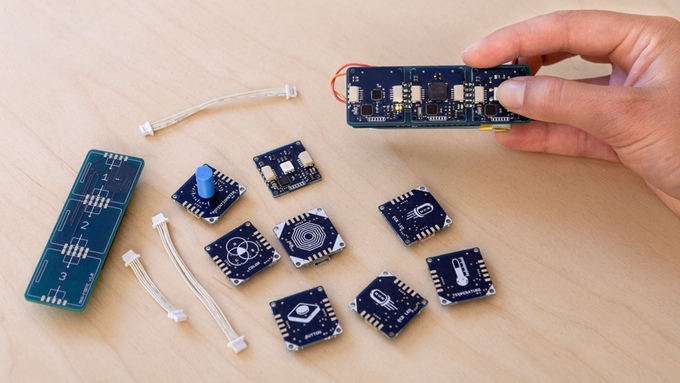
Now anyone can make cool hardware and, thanks to Arduino, it is easier than ever to connect your devices to the Internet and take in data from the outside world. TheESLOV IoT Invention Kit is an official Arduino product that adds Internet of Things capabilities to your hardware products. Trying to build a connected fridge to beat Samsung? Go for it with the ESLOV. Want to knock Sony off its perch? Try popping an ESLOV unit onto your Arduino board and take on major manufacturers from your living room.

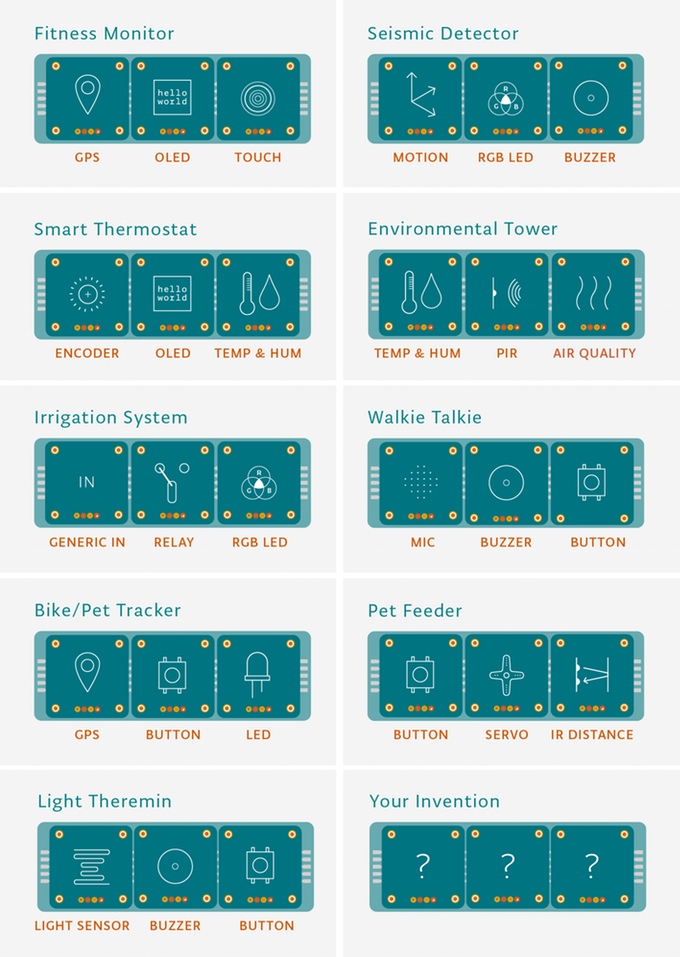
Think of the ESLOV system as a sort of Mindstorms on steroids. This self-described “plug-and-play toolkit” lets you connect multiple sensors and outputs together to create various systems. This chart shows a few of the possible permutations. Everything is controlled via Arduino’s online IDE.


ESLOV IoT Invention Kit project video thumbnail


The system consists of various sensors as well as a Wi-Fi hub. Interestingly each sensor runs a ATmega328P processor, the same one found on the Arduino Uno. The entry-level $99 kit includes a WiFi and motion hub, a button, a buzzer, and an LED. The Pro model includes a Hall sensor, OLED Display, and GPS – 22 modules in total – for $499. The $249 intermediate kit seems to contain everything you need to get started, however.

The company is raising on Kickstarter and they’re looking for a hefty $500,000. They’ve hit $15K so far but with a little love from the maker community I think they can get it done. The kit should ship next July.


alert icon applepay icon arrow-down icon arrow-left icon arrow-right icon bar-chart icon bell icon book icon brand-assets icon cart icon chat icon check icon circle-k icon circle-left icon circle-right icon clipboard icon clock icon close icon closed-caption icon duplicate icon embed icon facebook icon flag icon gear icon heart icon info icon instagram icon kickstarter icon leaf icon loading-spin icon lock icon mail icon menu icon mobile icon pause icon pin icon pinterest icon play icon plus icon search icon solid-arrow icon star icon stopwatch icon trash icon tumblr icon twitter icon user icon volume-up icon write icon youtube icon
Related Posts Plugin for WordPress, Blogger...