Showing posts with label US. Show all posts

Monday, April 3, 2017

US man gets electrocuted after sleeping with extension cord in bed, to charge his iPhone

US man gets electrocuted after sleeping with extension cord in bed, to charge his iPhone

A 32 year old man from Huntsville, Alabama in the US got electrocuted after going to sleep with an extension cord in his bed. The cord was used to power up his iPhone, and it was a habit for him to go to sleep while the smartphone was charging.
A dog-tag that he wore around his neck came into touch with the exposed prongs of the charger, that had come loose. The man felt a sudden jolt of electricity that threw him out of the bed, according to a report in the Washington Post.
“It was the eeriest, darkest, most demonic thing you could ever experience,” the man told the paper. The man went numb, felt pressure around his neck, his vision began to fade, and his heartbeat thundered in his ear. He managed to pluck out the necklace, but suffered burn marks on his neck, with skin and flesh missing, and the pattern of the dog-tag were burnt into his hand. There was smoke coming out of the extension cord.
The man was hospitalised, and the doctors noted that he had suffered from second and third degree burns on his neck and hands. The shock could have potentially killed the man, if he had not managed to remove the necklace.
The man now charges his phone in the kitchen, far away from his bed. The incident highlights the dangers of charging a phone on a bed while sleeping.
Publish date: April 3, 2017 12:01 pm| Modified date: April 3, 2017 12:01 pm

Thursday, January 12, 2017

India and US sign memorandum of understanding to continue cooperation in cyber security

India and US sign memorandum of understanding to continue cooperation in cyber security

India and the US have signed a memorandum of understanding (MoU) on cooperation in the field of cyber security, an official statement said on Wednesday. “India and the US have signed a memorandum of understanding between the Indian Computer Emergency Response Team (CERT- In) under the Ministry of Electronics nd Information technology of the government of India and the Department of Homeland Security, government of the United States of America on cooperation in the field of cyber security,” the statement said.
The agreement was signed by Aruna Sundararajan, secretary, Ministry of Electronics and Information Technology, and Richard Verma, US Ambassador to India, on Wednesday here. “The MoU intends to promote closer co-operation and the exchange of information pertaining to the cyber security in accordance with the relevant laws, rules and regulations of each economy and this MoU and on the basis of equality, reciprocity and mutual benefit,” the statement said.
Earlier the US and India had signed an MoU on July 19, 2011 to promote closer cooperation and timely exchange of information between the organisations of their respective governments responsible for cyber security. Since, July 19, 2011, regular interactions between CERT-In and US CERT are taking place to share the information and discuss cyber security-related issues.
In continuation to the cooperation in cyber security areas both have renewed the MoU, the statement added.
IANS

Friday, January 6, 2017

US files a lawsuit against D-Link for failing to secure its routers and security cams from hackers

US files a lawsuit against D-Link for failing to secure its routers and security cams from hackers

Image Credit: D-Link
The U.S. Federal Trade Commission filed a lawsuit against D-Link Corp on Thursday, accusing the Taiwan-based manufacturer of failing to take reasonable steps to protect its routers and internet-linked security cameras from hackers.
The FTC brought the charges as part of a broader effort to improve security of internet-connected devices, including routers, webcams, digital video recorders and other widely used consumer electronics devices. The company said the claim is without merit.
“D-Link denies the allegations outlined in the complaint and is taking steps to defend the action,” it said in a statement. “The security of our products and protection of our customers private data is always our top priority.”
Concerns about security of internet-connected devices, which are sometimes referred to collectively as the internet of things, or IoT, have surged since last year when hackers used armies of compromised routers, webcams and other electronic devices to launch a series of increasingly powerful attacks that severed access to some of the world’s biggest websites.
Security experts blamed those attacks on lax security in large numbers of IoT devices from dozens of manufacturers. They have called on the industry to better secure their equipment, removing easy-to-exploit vulnerabilities such as the use of default passwords that give hackers the keys to remotely access machines over the web.
Allison Nixon, director of security research with cyber intelligence firm Flashpoint, said the FTC’s action could encourage IoT manufacturers to beef up security. “I think vendors are going to take it seriously,” she said. “The IoT world needs to shape up quickly because this is a big problem.”
The FTC’s complaint alleged that D-Link neglected to protect the devices from “widely known and reasonably foreseeable risks of unauthorised access,” even as it highlighted security features in communications with consumers.
The FTC asked the U.S. District Court for the Northern District of California to order D-Link to improve its security practices and to pay the agency’s legal costs. The agency filed the case after issuing guidelines on securing IoT devices in 2015. FTC commissioners voted 2-1 to approve the filing of the lawsuit. The Democratic chairwoman Edith Ramirez and commissioner Terrell McSweeny voted yes, but the lone Republican commissioner, Maureen Ohlhausen, opposed the filing of the lawsuit.
Reuters

Saturday, December 24, 2016

Nokia sues Apple in US and Germany for infringing patents

Nokia sues Apple in US and Germany for infringing patents

Image: REUTERS/Dado Ruvic
By 
Nokia has announced that it has registered several complaints in the US and Germany against Apple. Nokia is alleging that Apple is infringing on a number of patents owned by Nokia. Nokia has three valuable patent portfolios that are commonly used in various consumer electronics such as tablets, mobile phones and personalCOMPUTERS.
Nokia has invested EUR 115 billion (roughly Rs 8 lakh crore) in research and development over a course of twenty years in the industry, with tens of thousands of patents to its name. Nokia also owns the patents of Alcatel-Lucent and Nokia Siemens Networks (NSN). Nokia acquired Alcatel-Lucent in mid 2016 and bought out NSN in 2016.
“Through our sustained investment in research and development, Nokia has created or contributed to many of the fundamental technologies used in today’s mobile devices, including Apple products. After several years of negotiations trying to reach agreement to cover Apple’s use of these patents, we are now taking action to defend our rights,” said Ilkka Rahnasto, head of Patent Business at Nokia.
This is not the first time that Nokia has sued Apple. In fact, Nokia alleging patent infringement by Apple was the first salvo fired in the smartphone patent wars, in 2009. Apple countersued, and Nokia sued Apple over infringements of additional patents in 2009 itself. In 2011, Apple and Nokia agreed on a settlement. Nokia claims Apple has declined to license several other patents it uses since the 2011 agreement.
MobileLawsuits14
Nokia has registered the complaints in Regional Courts in Dusseldorf, Mannheim and Munich in Germany and the US District Court for the Eastern District of Texas in the US. Nokia alleges infringement of 32 patents covering the display, user interface, software, the antenna, chipsets and video encoding. Nokia has said that it is in the process of filling complaints in other jurisdictions as well.

Wednesday, November 16, 2016

Budget Android smartphones in US found stealthily sending user data to China

Budget Android smartphones in US found stealthily sending user data to China

The Blu R1 HD, one of the phones that passed on user data to China
By 
Low budget Android phones in the US have found to be sending user data to China, without the permission of the user. The data being transmitted included the apps installed on the device, what order the apps were used, diagnostic data, lists of files, the call logs, the numbers of the people the user had messaged, and the content of the text messages sent by the user. In some instances, the location information of the user was also transmitted. The data was being sent to Shanghai Adups Technology Limited.
Anti Virus software was not detecting the secret transmissions, because they normally assume that the firmware installed on the device by the manufacturers are safe. An expert user would have been able to detect the transmissions, but not a regular user. The compromised firmware was able to remotely reprogram the devices, bypass existing Android permissions, and allow for remote control of the device. The firmware essentially acted as a backdoor to devices.
The secret transmissions were discovered by Kryptowire, a company started by the US Defense Advanced Research Projects Agency (DARPA) and the Department of Homeland Security (DHS). Google, Amazon, Adups and Blu were all informed of the transmissions. Permission from the user was not taken for transmitting the data, and the data was itself packed in multiple layers of encryption.
Blue representatives confirmed to the New York Times that the firmware was not meant for devices used in the US, and that it had acted swiftly to resolve the issue. Blu smartphones in the market are no longer affected, and are not beaming back data to China any more. Additionally, Blu representatives re-assured users that all data collected so far has been destroyed. Adups, Google, Blu or Kryptowire have not revealed a complete list of affected models.
In response to the disclosure by Kryptowire, Adups released a statement in response, claiming that the technology used in the firmware was for identifying and flagging junk text messages. The firmware was inadvertently shipped with the Blu devices. Adups has been cooperating with Blu and Google to make sure the data is not collected again. The data was collected for only a short period of time, and was not shared with anyone else.

Thursday, November 3, 2016

EU-US Privacy Shield data transfer agreement under scrutiny by privacy advocacy groups

EU-US Privacy Shield data transfer agreement under scrutiny by privacy advocacy groups

(Image credit: Getty Images)
A new EU-U.S. pact governing the transfer of personal data faces a second legal challenge, putting the details of the deal which underpins billions of dollars of transatlantic trade in digital services under further scrutiny. French privacy advocacy group La Quadrature du Net, non-profit Internet service provider French Data Network and its Federation FDN industry association have now challenged the adoption of the Privacy Shield pact by the European Commission at the Luxembourg-based General Court, following in the steps of Irish group Digital Rights Ireland.
The Privacy Shield agreement was reached earlier this year after the European Union’s highest court struck down the previous Safe Harbor Principles used by companies to enable them to transfer Europeans’ personal data to the United States, due to concerns about intrusive U.S. surveillance of online data. The new agreement gives businesses storing Europeans’ data on U.S. servers – from human resources information to people’s browsing histories and hotel bookings – an easy way to do so without falling foul of tough EU private data transfer rules.
More than 500 companies have signed up to Privacy Shield so far, including Google, Facebook and Microsoft, while over 1,000 are being processed by the U.S. Department of Commerce. The agreement seeks to strengthen privacy protections for EU citizens by giving them a means of seeking redress in the case of disputes, including through a new privacy ombudsman within the State Department who will deal with complaints from Europeans about U.S. spying.
But the objectors say that restrictions on U.S. surveillance activities – in particular the bulk collection of data and the purposes for which the data can be used – are inadequate and therefore the Privacy Shield agreement should be annulled. Under EU law companies or individuals may challenge EU acts before the EU courts if they are directly concerned within two months of the act coming into force, otherwise they have to go through national courts, a process which takes longer.
However both challenges face a strong risk of being declared inadmissible if the court finds that the associations are not directly concerned. In their challenge the French groups say that the U.S. ombudsman is not an effective mechanism for dealing with complaints. “The fact that it relies on so-called ‘independent’ instruments is in no way sufficient to consider it an independent judicial entity,” they said.
A spokesman for the European Commission, which negotiated the Privacy Shield with Washington, said it was aware of the new complaint. “We don’t comment on ongoing court cases. As we have said from the beginning, the Commission is convinced that the Privacy Shield lives up to the requirements set out by the European Court of Justice, which have been the basis for the negotiations,” Christian Wigand said.
The U.S. Department of Commerce did not respond to questions about the second challenge.
Reuters

Friday, October 28, 2016

Facebook announces Masks, an AR overlay feature for Live similar to Snapchat Lenses

Facebook announces Masks, an AR overlay feature for Live similar to Snapchat Lenses

By 
Facebook has announced augmented reality realtime overlays to Live videos. The feature is called Masks, and is similar to Snapchat Lenses. The immediate roll out is for iOS users in US, UK and New Zealand. However, over the course of a few months, the feature will be making it to Android devices on more countries. Public figures using Facebook Mentions will also have access to the Masks feature, so fans can see their favorite celebrities using Masks in their Lives.
facebook-masks-2
The Masks feature is launched just in time for Halloween, and there are a few limited edition Masks that will be available only for a short time. The limited edition masks are a pumpkin and a witch. The skull, evil queen and other masks will be available for use in Facebook Lives even after Halloween is over. Other options include a clown, a panda, and a flower in your hair Mask.
facebook-masks-1
Once a user goes live, a magic wand icon appears on the top right of the screen. Tapping on it opens up a creative tools tray which includes filters, drawing and now, Masks. The masks can be scrolled through, and switched in realtime. Tapping on the close icon on the top right of the screen stops the creative tools overlay. The first Mask, at the very right of the Mask list, is a no Mask option.
facebook-halloween-reactions
Facebook is also introducing a limited edition reactions bar just for Haloween. This replacement will occour in only some countries. The Like button shows an animated skeletal hand. The Love reaction shows the heart being chomped by mysterious invisible teeth. The laughter reaction shows a laughing witch. The wow button is a floating ghost. Frankenstein sheds a tear instead of the sad animated emoji. Finally, there is an angry pumpkin with red glowing eyes. Check out the animations.
The announcements are the latest in a series of steps Facebook has taken to openly imitate Snapchat features. Facebook is obsessed with owning a Snapchat like app. Facebook has been testing an photo uploader for iOS with Snapchat styled filters. In Brazil and Canada, Facebook had been testing a Snapchat style homescreen on its Facebook App. Most of the home screen is taken up by the view from the selfie camera, with an option for applying realtime filters similar to Snapchat Lenses.

Wednesday, October 19, 2016

Google updates AdWords to let businesses chat with customers through advertisements

Google updates AdWords to let businesses chat with customers through advertisements

By 
Messaging is a convenient platform for both businesses and customers to interact.Facebook, Google and Microsoft have all promoted the untapped potential of conversations during developer conferences held over the course of this year.
For businesses, it gives a direct line of communication with the customer. The customer can participate whenever they can afford the time and attention, and continue the conversation later.
Google has announced a new feature for advertisements shown in search results, that allows businesses to chat with their customers. For those businesses that use the feature, there will be a messaging option shown below the calling option attached to the advertisements. On tapping the chat bubble icon, a pre-generated text message selected by the business opens the conversation.
Google consumer surveys conducted in US, Canada, Australia and UK show that sixty five percent of consumers are open to the idea of texting with a business to get information or schedule an appointment.
The new feature is called click-to-message ads. A select few partners are already using the service. Gavin Chan, Digital Marketing Manager of AnyVan says “Click-to-message is a useful tool that allows consumers to engage with our business in a way that’s comfortable and efficient for them. They could be on their commute or in a rush, so they can text us quickly through click-to-message. It’s also a good medium to get questions answered that aren’t addressed on our website, or to reach us during hours when our office is closed.”
Gavin Parker, Paid Search Manager, Auto & General says “The results from click-to-message have been phenomenal and we’ve seen a 80 percent higher conversion rate when compared to other similar channels. We can now tap into an important consumer base that prefers to use SMS to learn more about our insurance products.”
Businesses can integrate chat with their advertising by setting up message extensions. The feature is expected to roll out over the course of the next few weeks. The click-to-message feature will be available to advertisers at no extra cost.
The problem with the feature as of now is that it triggers an SMS interaction. A better implementation is to integrate with the more common instant messaging applications such as Telegram, WhatsApp and Messenger. The feature could potentially tie into existing chatbots by the businesses on these platforms. SMS is an outdated and expensive form of chatting, and is bound to be less engaging as an instant messaging application.

Wednesday, October 12, 2016

3 ways state and local governments can ensure the future of 5G mobile networks in the US


Ahead of the White House Frontiers Conference, Richard Adler, of the Institute for the Future, explained how state and local governments can help pave the way for 5G in 2020.

By Conner Forrest | October 11, 2016, 9:25 AM PST


The future of many technologies hinges on the deployment of 5G networks, but there are still a few potential roadblocks to their development Richard Adler, a distinguished fellow at the Institute for the Future, said in a press call on Tuesday.

The call came a few days before the White House Frontiers Conference kicks off in Pittsburgh. The conference will focus on advances in science and technology, and Adler hosted a call to discuss the importance of 5G networks in supporting innovation and the role they will play in some of the technologies that the conference will focus on.

Mobile data traffic has experienced a 4,000x increase in the past 10 years, Adler said, and the next-generation 5G networks will help increase communication times, and improve speed and bandwidth as traffic continues to grow. The standard for 5G won't be completed until 2020, Adler said, but actions have been taken around the US to lay the foundation for the network.


One of the biggest differences with 5G is that it uses what is known as millimeter wave band, which has a shorter range, but is key to increasing capacity. Because of that, though, providers will

Wednesday, October 5, 2016

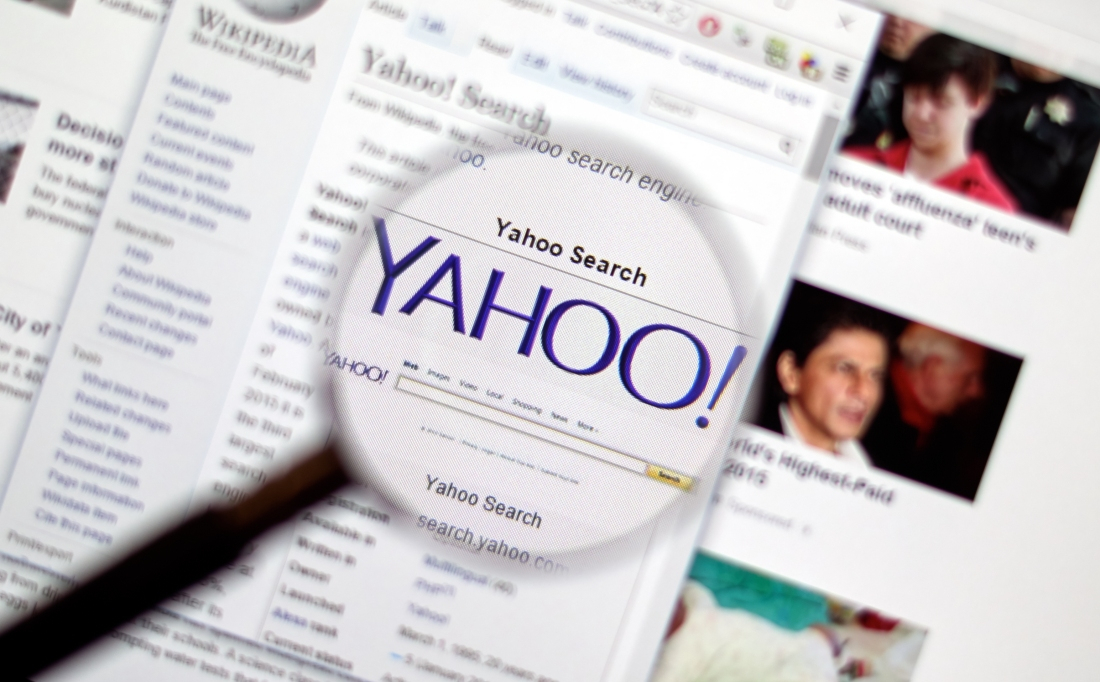
Yahoo built software to scan all its customers' emails for US spy agencies


By Rob Thubron on October 5, 2016, 6:15 AM


It seems there’s no end to Yahoo’s problems. Last month, the troubled company admittedthat at least 500 million user accounts had been compromised in a breach that took place in 2014. It claimed “state-sponsored actors” were responsible for the attack, though a security firm disputes this. Now, it’s been revealed that Yahoo secretly built custom software last year that scanned all of its customers’ incoming emails for information provided by US intelligence officials.

The report comes from Reuters’ Joseph Menn, citing three people familiar with the matter.

Yahoo was complying with a classified US government request when it created the scanning tool that searched hundreds of millions of user emails at the behest of the National Security Agency or FBI. The software was searching for a specific string of characters, though it’s unclear exactly what words or phrases it was looking for and what data, if any, Yahoo handed over to the authorities.

When Yahoo’s internal security team discovered the software, they initial thought it was the work of hackers. Company CEO Marissa Mayer’s decision to comply with the demand led to Chief Security Officer Alex Stamos leaving his position to join Facebook in June 2015. Stamos said a programming flaw could have allowed hackers to access the stored emails.

The incident is the first known case of a company agreeing to an agency’s request to scan all arriving emails, rather than probing stored messages or a small number of accounts in real time. "Yahoo is a law-abiding company, and complies with the laws of the United States," the firm said

Thursday, September 29, 2016

Indian bitcoin company raises $1.5 million from US, Indian investors

#BITCOIN

Indian bitcoin company raises $1.5 million from US, Indian investors


Unocoin, a Bangalore-based bitcoin startup, has raised $1.5 million in funding from a mix of Indian and U.S. investors, the company announced on Thursday.
The company, which runs a trading platform to buy, sell, and store bitcoins for Indian customers, said the money raised was the largest for an Indian bitcoin startup. Unocoin, which has 100,000 users and more than 30 employees, has been in operation since December 2013.
Unocoin describes itself as the Coinbase of India. San Francisco-based Coinbase is the largest U.S. bitcoin company and runs an exchange and a wallet service, among other businesses.
Funding came from Indian entities such as Blume Ventures, Mumbai Angels and ah! Ventures along with U.S. investors such as Digital Currency Group, Boost VC, Bank to the Future, and FundersClub.
Digital Currency Group was founded by one of the top U.S. bitcoin investors Barry Silbert, while Boost VC is run by U.S.-based Adam Draper, the son of billionaire entrepreneur Tim Draper.
“We needed a separate exchange for India. A few years ago when we wanted to buy bitcoin, there was nothing available in India,” Sunny Ray, Unocoin’s co-founder and president told Reuters in an interview.
“So if you want to buy bitcoin from an international exchange, you will have to do a wire transfer from India to these international exchanges and get your bitcoin and oftentimes it takes three to five days.”
Unocoin raised about $200,000 in its first financing round. It started from a small hometown called Tumkur, near Bengaluru.
Bitcoin, a digital currency, was trading at $604.50 on the Bitstamp platform
Reuters

Friday, September 23, 2016

Sony Xperia XZ lands in the US on October 2 for $699.99


Sony announced the Xperia XZ at the beginning of this month. It will replace the Xperia X Performance as the company's flagship smartphone after just a few short months of that device being available.
Speaking of availability, the Xperia XZ will arrive in stock in the US on October 2. It will be sold by retailers such as Amazon and Best Buy, and its recommended price is $699.99. Obviously for that amount you'll get an unlocked unit, which will work with GSM-based networks such as AT&T and T-Mobile (and all MVNOs operating on their infrastructure).
Expect the XZ to go up for pre-order soon, joining the X Compact which was announced alongside it. The smaller handset will be out sooner, though, on September 25. Sadly the Xperia XZ won't have a fingerprint scanner in the US, continuing an unfortunate trend for Sony's smartphones.
Source
Related Posts Plugin for WordPress, Blogger...