Showing posts with label FCC. Show all posts

Monday, April 3, 2017

Internet providers in US say that they are not going to sell their consumers’ internet browsing history

Internet providers in US say that they are not going to sell their consumers’ internet browsing history

Representational Image : Reuters
Comcast Corp, Verizon Communications Inc and AT&T Inc said Friday they would not sell customers’ individual internet browsing information, days after the US Congress approved legislation reversing Obama administration era internet privacy rules.
The bill would repeal regulations adopted in October by the Federal Communications Commission under former President Barack Obama requiring internet service providers to do more to protect customers’ privacy than websites like Alphabet Inc’s Google or Facebook Inc . The easing of restrictions has sparked growing anger on social media sites.
“We do not sell our broadband customers’ individual web browsing history. We did not do it before the FCC’s rules were adopted, and we have no plans to do so,” said Gerard Lewis, Comcast’s chief privacy officer. He added Comcast is revising its privacy policy to make more clear that “we do not sell our customers’ individual web browsing information to third parties.”
Verizon does not sell personal web browsing histories and has no plans to do so in the future, said spokesman Richard Young. Verizon privacy officer Karen Zacharia said in a blog post Friday the company has two programs that use customer browsing data. One allows marketers to access “de-identified information to determine which customers fit into groups that advertisers are trying to reach” while the other “provides aggregate insights that might be useful for advertisers and other businesses.”
Republicans in Congress Tuesday narrowly passed the repeal of the rules with no Democratic support and over the objections of privacy advocates. The vote was a win for internet providers such as AT&T Inc, Comcast and Verizon. Websites are governed by a less restrictive set of privacy rules. The White House said Wednesday that President Donald Trump plans to sign the repeal of the rules, which had not taken effect.
Under the rules, internet providers would have needed to obtain consumer consent before using precise geolocation, financial information, health information, children’s information and web browsing history for advertising and marketing. Websites do not need the same affirmative consent. Some in Congress suggested providers would begin selling personal data to the highest bidder, while others vowed to raise money to buy browsing histories of Republicans.
AT&T says in its privacy statement it “will not sell your personal information to anyone, for any purpose. Period.” In a blog post Friday, AT&T said it would not change those policies after Trump signs the repeal. Websites and internet service providers do use and sell aggregated customer data to advertisers. Republicans say the rules unfairly would give websites the ability to harvest more data than internet providers.
Trade group USTelecom CEO Jonathan Spalter said in an op-ed Friday for website Axios that individual “browser history is already being aggregated and sold to advertising networks – by virtually every site you visit on the internet.” This week, 46 Senate Democrats urged Trump not to sign the bill, arguing most Americans “believe that their private information should be just that.”
Reuters
Publish date: April 3, 2017 12:54 pm| Modified date: April 3, 2017 12:55 pm

Friday, March 10, 2017

Samsung Galaxy S8, Galaxy S8+ gets FCC certfication, will feature facial recognition; also live images leaked

Samsung Galaxy S8, Galaxy S8+ gets FCC certfication, will feature facial recognition; also live images leaked

By 
It’s a new day and we have more scoop on the Galaxy S8. This one comes from Korea Economic Daily that says the upcoming flagship smartphone from Samsung will feature facial recognition. This will be an extra security option in addition to the fingerprint sensor, and possibly an iris recognition which made its appearance on the Note 7. This could make unlocking the smartphone easier as one would just have to look into the device.
Apparently it will be faster too as it could take less than 0.01 seconds to unlock your phone as said by a Samsung official. So more security and faster unlocking, that’s a big thumbs up.
The smartphone has also said to have got official FCC certification which has revealed that the Samsung Galaxy S8 will be manufactured in Vietnam and will have models SM-G950U, SM-G950U1 and SM-G950W. Same is the case with the S8 Plus which has three model numbers, SM-G955U, SM-G955U1 and SM-G955W
s8-fcc-labels (1) s8-fcc-labels (2)
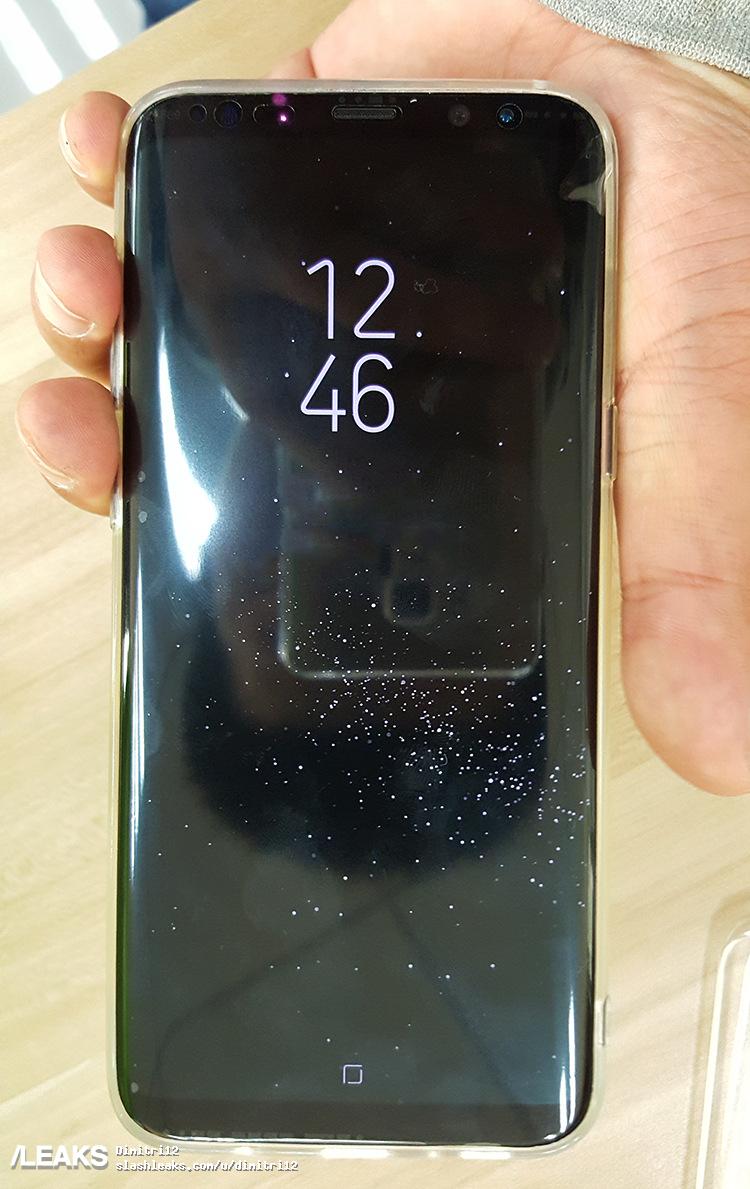
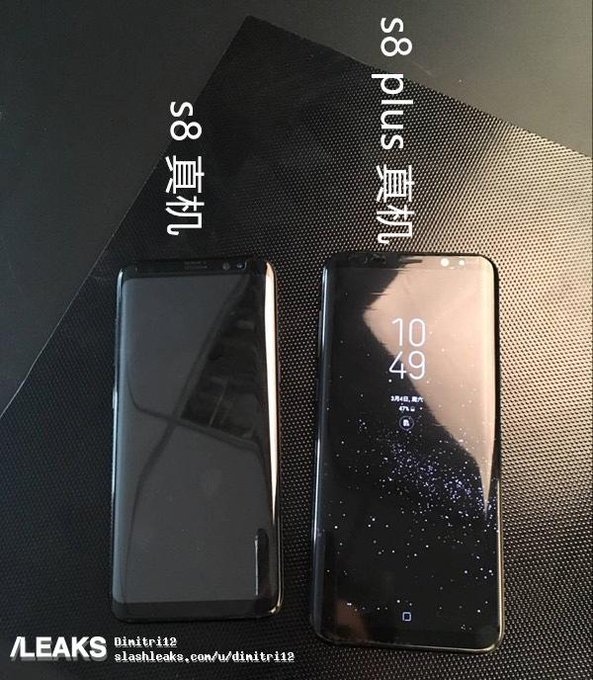
Apart from that we are seeing more alleged images of the smartphone doing rounds on the internet and they do match the one Evan Blass released a week back.
Image: BGR
Image: BGR
And then we have these hands-on videos that yet again show the curvy handset.
The Galaxy S8 will be officially unveiled at the Unpacked event on 29 March and is expected to hit shelves on 28 April.

Thursday, September 29, 2016

FCC votes to bolster Wireless Emergency Alerts


By Shawn Knight on September 29, 2016, 6:15 PM


The Federal Communications Commission on Thursday voted to update the rules governing Wireless Emergency Alerts (WEA) in an effort to make them more useful.

The system, designed to alert citizens on their mobile devices of emergency-type situations or events, was most recently on display earlier this month when New Yorkers were warned of a dangerous bombing suspect on the loose.

As The Washington Post recounts, the suspect was eventually apprehended following a shootout with police. The alert that was pushed out to the public wasn’t terribly informative; in fact, the publication likened it to a text message that a teenager might send to a friend. What’s more, the alert lacked helpful information that might have led to his apprehension sooner such as a photo.

Authorities would no doubt have preferred to issue a more detailed alert but simply weren’t able to do so due to limitations of the WEA system. As such, the message that went out was ripe with abbreviations and didn’t include a picture of the suspect.

Thanks to today’s FCC vote, future alerts should be much more robust.

Under the new rules, authorities will have up to 360 characters at their disposal – up from just 90 currently and far less than even Twitter’s 140-character limit. Furthermore, authorities will be able to send alerts with greater geographic accuracy which means you’ll be less likely to receive an alert about a tornado that may be many miles away.

Future messages will also be available in Spanish and will cover additional events, we’re told.
Related Posts Plugin for WordPress, Blogger...