Showing posts with label BlackBerry. Show all posts

Wednesday, January 25, 2017

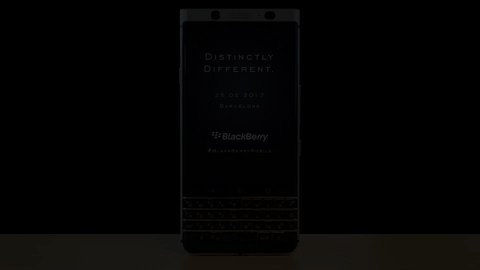
MWC 2017: BlackBerry to officially unveil ‘Mercury’ flagship at MWC on 25 February

MWC 2017: BlackBerry to officially unveil ‘Mercury’ flagship at MWC on 25 February

By 
BlackBerry’s recently announced a flagship smartphone that seems to pack in the bells and whistles but oddly came without a name, specifications and price tag. Well, after what many would call a positive (yet unofficial) reveal at the recent CES, with fans drooling all over the new device codenamed ‘Mercury’, BlackBerry has finally set a date for an official unveil and it has been scheduled for 25 February.
The BlackBerry Mercury indeed got plenty of BlackBerry fans excited after its unveil at CES. The device will be manufactured by TCL in certain global markets, while BlackBerry is still in the process of finalising local manufacturers for other markets like India, Indonesia and the rest where TCL will not be able to sell BlackBerry products directly.
Coming to the smartphone, it features a uni-body metal design with a hardware keyboard on the front. The keyboard apart from acting as a navigation tool, this time around also features a fingerprint reader in the space key. At the back BlackBerry seems to have gone with a soft touch surface with metal underneath.
blackberry-mercury
Inside, the Mercury, fans can expect a Qualcomm Snapdragon 821 chipset or a 625 with 4GB RAM and 64GB of storage. On the back there is a 13MP camera, while an 8MP unit sits above the display at the front for selfies.  There is a 4.5-inch display that sits above the keyboard that expected to feature a 1620 x 1080 resolution along with its odd aspect ratio. The Mercury boots to Android 7.0 Nougat and will come with BlackBerry’s suite of DTek applications to make the device secure at both the hardware and software level.

Monday, November 7, 2016

BlackBerry officially announces the DTEK50 and DTEK60 at Rs 21,990 and Rs 46,990 in India

BlackBerry officially announces the DTEK50 and DTEK60 at Rs 21,990 and Rs 46,990 in India

By 
BlackBerry has fully embraced its new Android avatar with the official launch of two new handsets in India. The two devices, called the DTEK50 and DTEK60 are priced at Rs 21,990 and Rs 46,990 respectively. Both the devices will start selling by early December.
The DTEK50 is a few months old and is already on sale in some countries. The devices packs in a 5.2-inch IPS LCD screen with a resolution of Full HD (441 ppi). Under the hood you’ll find a Snapdragon 617 SoC and 3GB of RAM. Onboard storage is limited to 16GB, but it’s expandable by up to 256GB via the microSD card slot. A 13MP f/2.0 rear camera and 8MP f/2.2 front camera make up the camera system. It has a 2,610 mAh battery, which supports Qualcomm’s QuickCharge 2.0 standard.
The more powerful DTEK60 was unveiled in October this year and packs in flagship specs, featuring a Snapdragon 820 SoC (clocked at 2.15GHz), 4GB of RAM and 32GB of onboard storage. This is also expandable by up to 256GB via the microSD card slot.
The screen on the DTEK60 is a 5.5-inch AMOLED display with a resolution of 2K (2560×1440 or 534ppi). The camera unit consists of a 21MP f/2.0 rear camera and an 8MP f/2.2 front camera. The battery is a 3,000 mAh unit with QuickCharge 3.0 support.
Both phones run Android 6.0 Marshmallow with a custom BlackBerry skin and BlackBerry’s own, custom DTEK security suite.
Connectivity comes in the form of 4G support, 802.11 a/b/g/n/ac, Bluetooth 4.2 with A2DP with GPS, GLONASS, etc. also supported.
Interestingly, the DTEK60 uses a USB Type-C connector whereas the DTEK50 uses a microUSB connector. The DTEK50 also lacks a fingerprint sensor.

Tuesday, November 1, 2016

Twitter is failing despite bright minds and millennials

Twitter is failing despite bright minds and millennials

Image Credits: REUTERS
By 
The market today is dominated by millennials. They have short attention spans. If there’s an industry report out there, it would highlight changing consumer patterns that in a big way justified the rise of social media networks such as Twitter. 140 characters, no nonsense. Makes perfect sense.
Ideally, if these reports did make sense, and Twitter appealed to the current demographic profile online, it should’ve been a runaway success. But reality is very different. Facebook seems to rule the social media world. Even Instagram, despite being late entrant with a focus on visual expression is more successful than Twitter.  So what is it, that didn’t work with Twitter?
Twitter and Facebook on the stock market are poles apart. Image: Google Finance
Reports could be bollocks
That’s a quick way to analyse the developments. Research folks come up with reports that present a case for a immense business potential and opportunity. Twitter began at a time when consumers still used the text messaging service on mobile devices. Data consumption blew to proportions beyond expectations. Till the day we could very comfortably say that SMS is dead. Services such as WhatsApp and other OTT services clearly have surpassed SMS in terms of use. The primary reason is telcos continued to charge on SMS per message. In the age of the Internet, there’s no real reason to use it, unless you’re one of those weight-loss businesses who needs to spam 200 users daily. But then, you’d probably exploit the FUP on SMS anyway.
Twitter-Costolo_AP
Ex Twitter CEO Dick Costolo
Failure top down
I remember BlackBerry and Nokia. Both were company with a vast fan following. And there’s no doubt, their current situation is all thanks to failure on part of the respective leadership. This seems to be the case with Twitter. And the cracks seem to have developed a couple of years ago. First, the then CEO Dick Costolo resigned. Soon after there were a couple of reports when Twitter ended up laying off employees in tranches. Since investor sentiment is critical, most of these developments are hushed. Today, the VP of APAC at Twitter, Rishi Jaitly, said he was moving on to newer opportunities.
A huge list comprising alumni from the likes of Google were employees at Twitter. They certainly don’t come cheap. They probably are very capable bright minds and skilled in their respective fields. Yet, the exodus of people at Twitter continues. Either they’re asked to go, or they’d simply start looking out for new opportunity. Like Jaitly, they may sugar coat it with ‘new opportunity, same mission.’
It’s natural. It’s happened at BlackBerry, Yahoo, Nokia, and almost every company that has eventually sold off or wound up.
Image Credits: Reuters
The struggle to stay relevant
I can’t help but reiterate how instead of thriving, Twitter is fighting a battle to stay relevant. On Twitter, the vocal crowd is now indifferent to the medium itself. There used to be a time when social media debates got vocal. Those in favour of Twitter would look down at those who preferred Facebook. Both are indifferent now. It’s kind of clear. Numbers matter right?
Facebook rules the game when it comes to number. Be it earnings from advertising, or sheer users, Facebook has an edge at any given point in time. The newer innovations at Twitter were supposed to be live video via Periscope, or short looping video which came in the form of Vine. After flirting for a long while, Twitter has dumped Vine. And is curious with Periscope. While Facebook seems to have nailed it with Live.
periscope-producer
That’s video. In addition, when it comes to advertising, brands can’t do much with Twitter beyond sponsored trends, sponsored tweets and may be a few cards here and there. Consumers may not necessarily care about any of these, but brands also increasingly plan Twitter into their larger campaigns to have a balance and generate short time buzz. When it comes to consistent driving of sales online, it’s back to the old rules. Anything but Twitter. The next time you browse through Amazon or Flipkart in search of that pair of Nike shoes, you’re more likely to see a follow up ad on Facebook rather than Twitter. And it’s not an isolated preference.
What’s unique about Twitter from a marketers point of view is trends. The only thing brands and advertisers, or communication strategists ever cared about Twitter was Trends. Depending on whether a particular campaign trended in Mumbai, India, or the World, brand executives get a louder pat on their back. No one ever expected a surge in sales via Twitter. Unfortunately, for Twitter, that makes its criticality in the advertisers options just nosedive.
Twitter HQ. Image: Twitter
Twitterati took more than they gave
Twitterati on the other hand, are busy fighting with each other. Right vs left. Democrat vs Republican. Unlike Facebook, again, where we’re busy watching cat and dog videos. Sigh, my Twitter bio says that I love dog videos. But I end up sharing more of those on Facebook rather than Twitter! That explains quite a bit.
Twitter has created quite a few personalities, just like YouTube or Facebook. Similarly, Vine also has a few stars. That’s the service they axed. They retained Periscope for now. But Vine’s gone. A piece in Billboard talks about how Vine stars made a last ditch effort to save the platform turned feature, but in vain.
So the next time someone tells me about millennials and all that this generation stands for as the basis for new business opportunity, I’m going to give them the reference of Twitter as my counter.

BlackBerry in software deal with Ford, first with an automaker

BlackBerry in software deal with Ford, first with an automaker

Image Credits: Reuters
BlackBerry has signed a deal to work directly with Ford Motor Co to expand the carmaker’s use of its QNX secure operating system, the Canadian technology company said on Monday, as Ford develops increasingly automated vehicles.
The deal with Ford is the first BlackBerry has done directly with a major automaker, though it currently sells its technology to auto industry suppliers.
The company is betting its future on expanding sales of software products, including to automakers and other manufacturers, after largely ceding the smartphone market to rivals including Apple Inc , Alphabet’s Google and Samsung Electronics Co Ltd.
Panasonic Automotive currently uses QNX software in the Sync 3 infotainment console that it supplies to Ford.
BlackBerry is hoping the new deal will expand use of BlackBerry’s software in Ford vehicles as the two companies identify other systems where it might be used.
“We can form the basis of the entire vehicle all the way from autonomous drive through to infotainment,” John Wall, the head of BlackBerry’s QNX unit, said in a phone interview.
Ford is ramping up its driverless vehicle efforts and plans to offer a fully automated vehicle for commercial ride-sharing in 2021, it announced in August.
QNX’s software is certified for use in autonomous driving and active safety systems, according to Wall.
“In the initial engagements you can think of an expansion into the cockpit; telematics, infotainment, cluster,” Wall said.
BlackBerry and Ford declined to say how QNX might be rolled out into new systems or discuss financial terms of the deal.
A dedicated team of QNX engineers based in Ottawa and Waterloo will work with Ford to expand the carmaker’s use of the Neutrino industrial operating system, as well as an overarching programme that can control other operating systems and related security technology, BlackBerry said. “We’re providing the plumbing for the vehicle that is both robust and safe and secure to allow the customers to build their applications on top of that,” Wall said.
Dan Dodge, who founded QNX in 1982, and stayed on after BlackBerry bought the company in 2010, left QNX at the end of 2015. Bloomberg reported in July that Apple hired him as part of its own self-driving plans.
Reuters
Related Posts Plugin for WordPress, Blogger...